This article may contain affiliate links. If you buy through them, Decorating Our Space may earn a small commission at no extra cost to you. Learn more.
I have a concrete kitchen counter, poured by the previous owner, that I was told to hate by nearly every design blog I read before moving in. Concrete counters, apparently, are a phase everyone regrets. Mine has been fine for six years, and the reason has nothing to do with the concrete itself. It has to do with what’s sitting next to it.
Temperature isn’t just about color
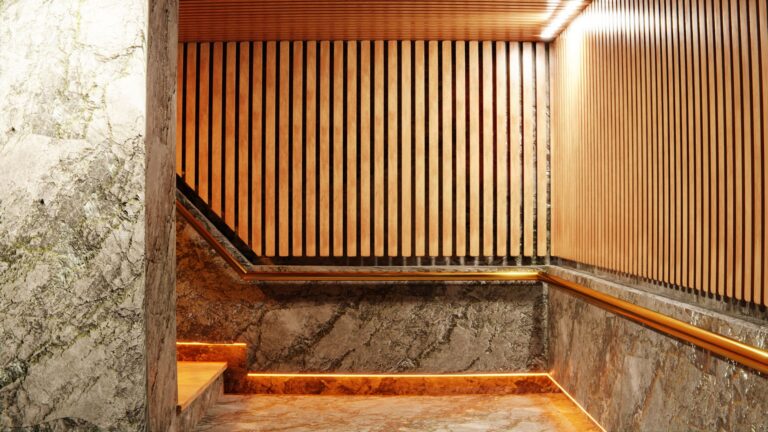
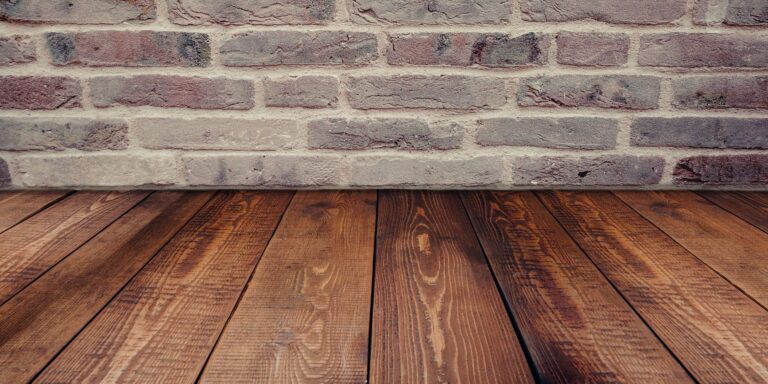
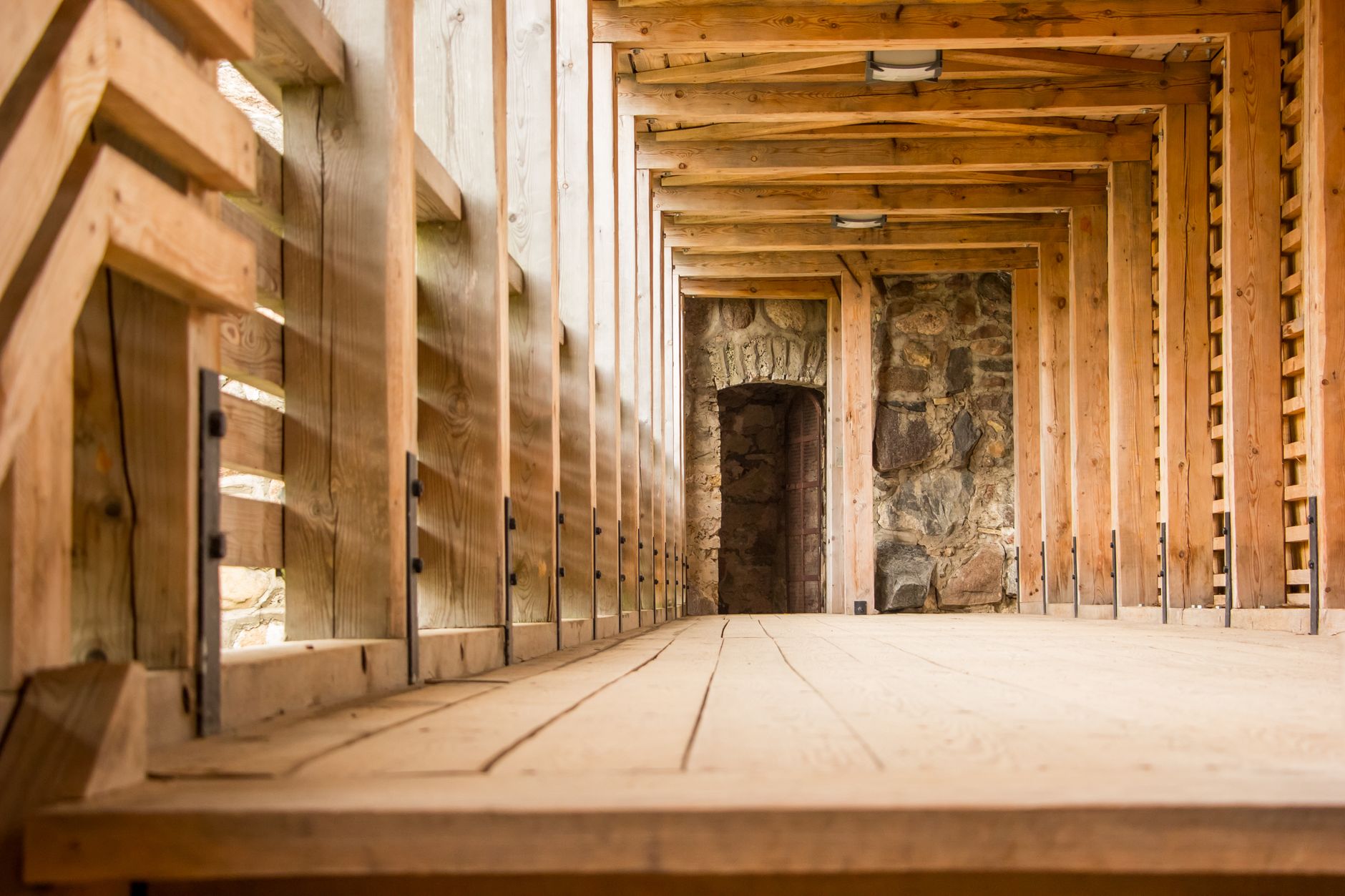
People usually think of warm and cool in terms of color, orange versus blue, but materials carry their own temperature independent of color entirely, and it’s a physical thing as much as a visual one. Concrete, steel, glass, and polished stone feel cool to the touch and read as visually cool even in a neutral gray or beige tone. Wood, wool, leather, and unglazed ceramic feel warmer to the touch and read as visually warmer even when they’re a cool-toned gray or white.
A room built entirely from materials in the cold category, concrete floor, steel shelving, glass table, chrome fixtures, tends to feel sterile no matter how carefully the colors are chosen, because the coldness isn’t coming from the color palette, it’s coming from the material choices underneath it.
What actually makes my concrete counter work
My counter sits below open wood shelving, next to a butcher block section I added for a smaller prep area, with a woven basket for produce sitting on top of it most days. None of that changes the concrete. It’s still exactly as cool and industrial as concrete is. But it’s no longer the only material telling a story in that part of the kitchen, and the wood elements around it are close enough, physically adjacent, that your eye registers them together rather than registering the concrete in isolation.
Distance matters here more than people expect. A warm material on the opposite side of a large room doesn’t do the same work as a warm material within a few feet of the cool one. Proximity is what lets your eye pair them.
One warm material can carry a lot of cold ones
You don’t need an equal split between warm and cold materials to avoid the sterile effect. A single substantial warm element, a wood dining table, a leather sofa, a wool rug, can offset several cold surfaces around it as long as it’s large enough or central enough to register clearly. My kitchen has concrete counters, a stainless steel range, and a glass pendant light, three cold materials, balanced mostly by one open wood shelf and the butcher block section. That’s not a fifty-fifty split. It works anyway, because the wood is positioned where the eye naturally lands first.
Textiles are the fastest fix if a room already feels cold
If you’ve already built a room around cold materials and it feels sterile, you don’t need to remove anything to fix it. Adding textiles, a wool throw, a linen curtain, a jute rug, brings warmth into a room faster and more cheaply than swapping out fixed surfaces like counters or flooring. Textiles also add warmth acoustically as well as visually, since hard cold materials tend to be reflective sound-wise too, and a room full of concrete, glass, and steel often sounds harsh in addition to looking cold.
I added a heavy linen curtain to my kitchen’s single window mostly to block afternoon glare, and it changed the temperature of the whole room more than I expected a single textile to, simply by breaking up how much hard reflective surface was in view at once.
Some rooms are supposed to feel cool
Not every room needs warming. A bathroom with tile, chrome fixtures, and a glass shower door reading as clean and cool is doing exactly what a bathroom is supposed to do, and forcing warm wood into every corner of it can work against the practical demands of a room that deals with water and humidity constantly. The temperature question matters most in rooms meant for lingering, living rooms, kitchens, bedrooms, where an entirely cold material palette works against the room’s actual purpose.
I don’t fight my bathroom’s coolness. I do fight it in my kitchen, because a kitchen is a room I want to want to be in, not just a room I want to be functional.
Testing before you commit to a cold material
Before choosing a cold, hard material for a major surface, counter, floor, a large table, I now think through what will sit next to it and how close that warm counterpart will physically be. If the honest answer is nothing warm nearby and no easy way to add something, that’s useful information before the concrete gets poured or the steel shelving goes up, not after. My counter works because I happened to add wood elements near it without fully realizing at the time why the room felt balanced. Six years later, I’d make the same choice on purpose instead of by accident.