This article may contain affiliate links. If you buy through them, Decorating Our Space may earn a small commission at no extra cost to you. Learn more.
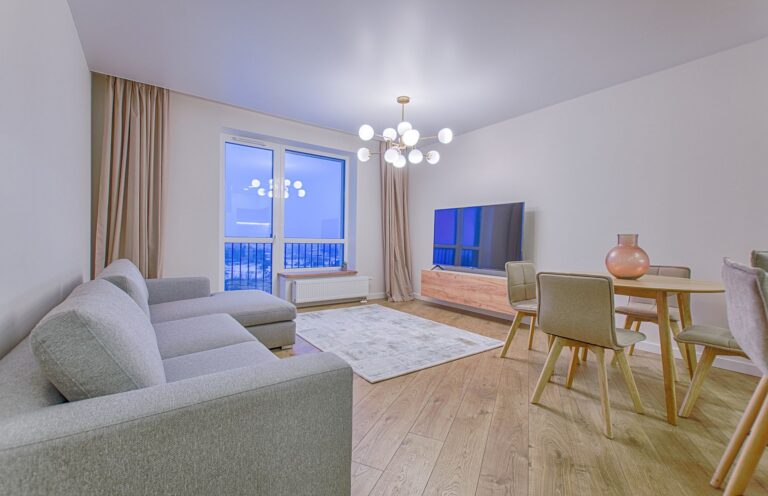
Every apartment I lived in during my twenties had the same layout by default. Couch against one wall, chairs against another, coffee table stranded in the middle of a floor that suddenly felt enormous and empty. I never chose that arrangement. It just happened, piece by piece, because pushing furniture to the perimeter felt like the safe, obvious move.
The habit comes from somewhere reasonable
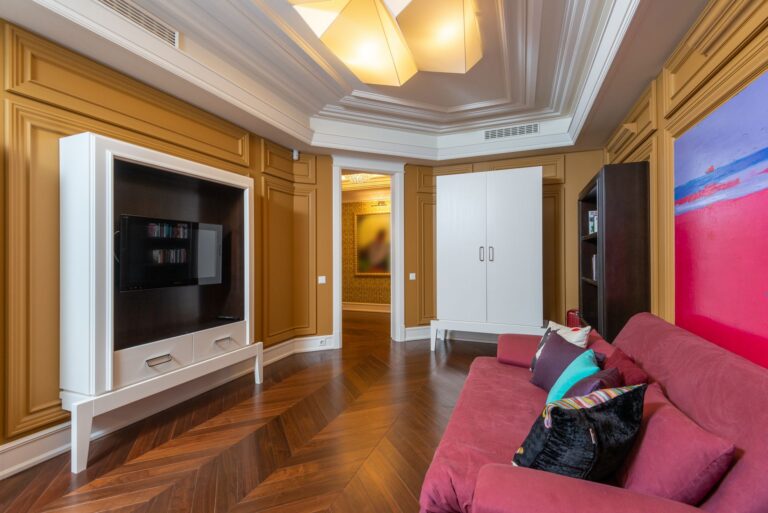
Walls do not move. They are the most stable reference point in a room, so it makes sense that furniture gravitates toward them. Pushing a couch against a wall also feels like it maximizes floor space, since anything in the middle of the room reads as an obstacle. Both instincts are reasonable. Neither one produces a layout that actually works for a room of any real size.
In a small room, ten by ten feet or smaller, pushing furniture to the walls genuinely can be the right call, since there is not enough floor to spare for a gap behind a couch. Past that size, the same instinct starts working against you.
What perimeter furniture actually does to a room
When every piece sits against a wall, the middle of the room turns into a wide, dead zone that nothing is arranged around. Conversations happen across an unnecessary gap. The coffee table ends up floating with no clear relationship to any seat. My own living room did exactly this for two years, wide open in the center and furniture stranded at the edges, and it always felt bigger than comfortable, not in a good way.
Floating furniture creates the rooms that feel intentional
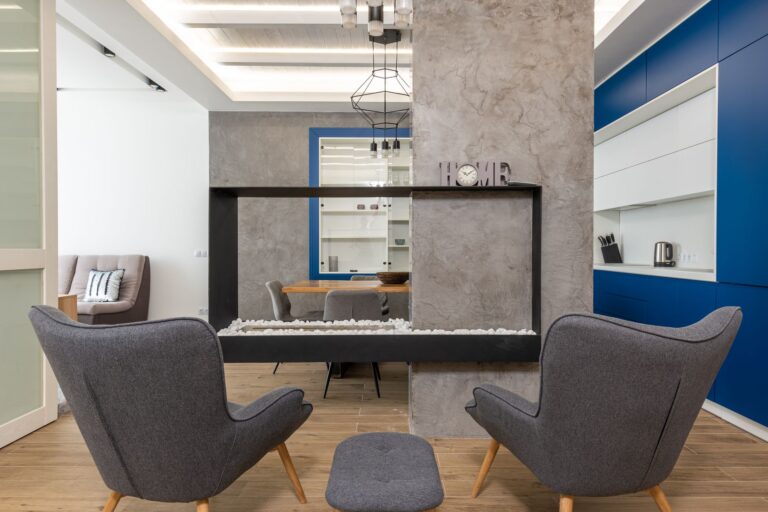
Floating a piece means pulling it away from the wall and letting the space behind it become part of the room’s circulation instead of dead space. I moved my couch about four feet off the back wall, which felt wasteful the first week, and used that gap as a walking path between the living room and the kitchen. The couch itself became a divider rather than a backdrop, and the seating area in front of it finally had a defined edge.
A rule of thumb I use now: if a room is wider than about twelve feet, at least one major piece of seating should be floating, not touching a wall. Below that width, there usually is not enough depth to spare.
A room with everything against the walls always looks like it is waiting for a party that never arrives.
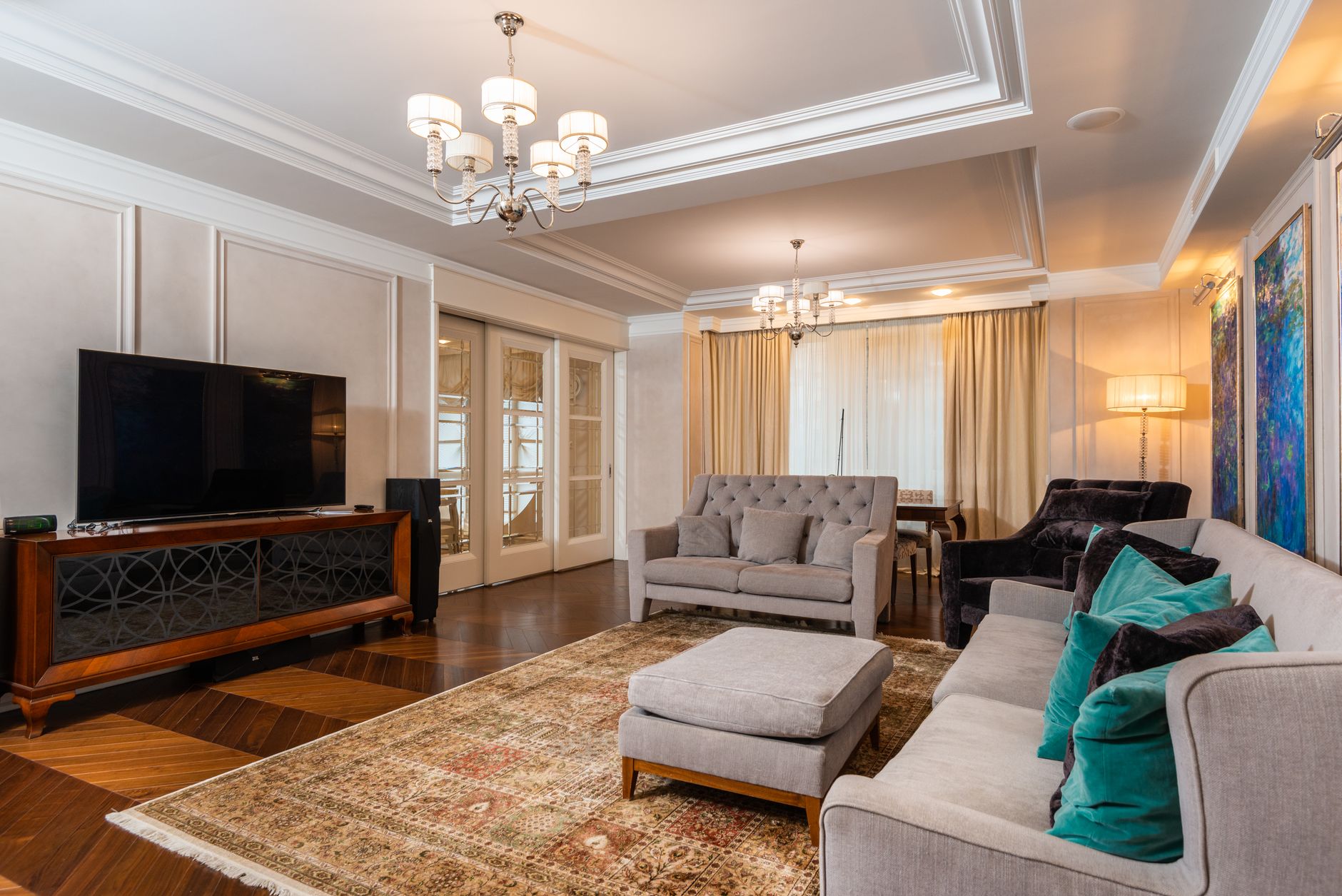
That image stuck with me because it is exactly what my old apartment looked like. Chairs lined up around the edges like a waiting room, all facing the center, nobody actually sitting anywhere close enough to talk. Pulling the seating in from the walls and grouping it around a rug fixed that without adding a single new piece of furniture.
The exception: narrow rooms and hallways
A long, narrow room, the kind where furniture almost has to run along one wall to leave a walking path on the other side, is the real exception to this whole idea. My own hallway-adjacent office is barely eight feet wide, and there the desk stays against the wall because floating it would block the only path through. Floating furniture is a tool for rooms with enough width to spare, not a rule to force onto every space regardless of its dimensions.
Start with the biggest piece
When I finally rearranged my living room, I moved the couch first and left everything else where it was for a day. Once the couch had a new position, floating and facing the center of the room instead of hugging the back wall, the rest of the furniture had an obvious relationship to build around. Chairs came in from their corners to face it. The coffee table moved to sit in front of it instead of drifting in the open middle of the floor.
Small rooms still need one thing pulled forward
Even in a room too small to float a full couch, I try to pull at least one piece, a chair, a small side table, an inch or two off its wall. It sounds trivial, but a room where every single edge touches a wall reads as flat and unfinished, even at a small scale. One piece breaking that pattern is often enough to make the whole room feel arranged rather than stored.
My furniture never changed. The two-year-old couch and the chairs I bought when I first moved out are still exactly what sits in my living room today. What changed was where they stood in relation to the walls, and that single shift did more for how the room felt than any object I could have added to it.
The back of a floating piece needs attention too
Once a couch or a shelf leaves the wall, its back is suddenly visible from other parts of the room, which is something perimeter furniture never has to deal with. My couch back faces the kitchen doorway now, and for the first month it looked unfinished, just upholstery with nothing to soften it. I added a narrow console table behind it and a low bowl on top, and that back side stopped feeling like the neglected side of the piece and started functioning as its own small surface.
Rugs anchor floating furniture so it does not drift visually
A couch floating in open space without a rug underneath can read as misplaced rather than intentional, like it simply has not found its wall yet. Once I put a rug under my floating couch, front legs fully on it and back legs close to the edge, the piece looked deliberately positioned instead of stranded. The rug is doing quiet work here, telling the eye that this spot in the middle of the room was chosen, not settled for.
Floating furniture takes a little getting used to, both for the person arranging it and for anyone walking into the room expecting the couch to be where couches usually go. Give it a few weeks before deciding it does not work. My own living room felt strange for about that long, and then it just felt like where the couch belonged.