This article may contain affiliate links. If you buy through them, Decorating Our Space may earn a small commission at no extra cost to you. Learn more.
My first studio in Queens was 410 square feet, and I spent the first month trying to furnish it like a one-bedroom with the wall knocked out. It did not work. A studio is not a small apartment with fewer rooms. It is one room asked to do the job of four, and every piece of furniture in it has to earn that.
The mistake most people make is buying furniture for a room that does not exist yet in their head. They picture a living room corner, a sleeping corner, a desk corner, and they shop for each one separately. Then the pieces arrive and none of them fit together because a studio does not have corners in the way a house does. It has one open volume, and everything in it is visible from everywhere else at once.
Start with sightlines, not zones
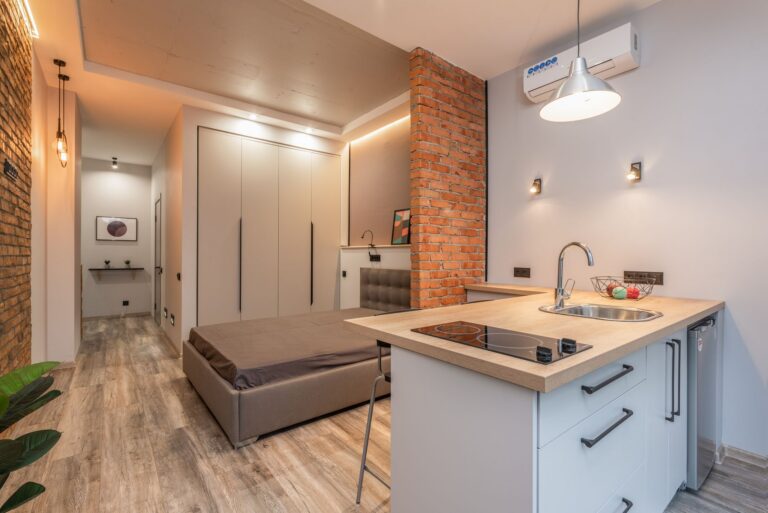
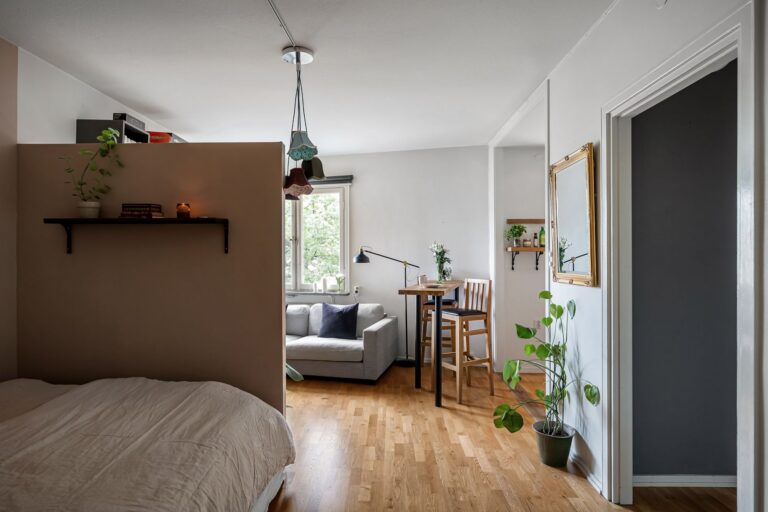
Before buying anything, stand in the doorway of the room and note what you see from that single vantage point. In my apartment, the doorway looked straight across at the window, which meant the bed could not go against that wall without becoming the first thing every guest saw. I moved the bed to the side wall and put a low bookshelf where the bed used to be, angled so its spine faced the door instead of its shelves. That one change made the room read as an apartment instead of a bedroom with a kitchen attached.
Sightline planning costs nothing and it matters more than any single piece of furniture you buy. Walk the room from the door, from the kitchen, from the bed. Note what is visible from each spot. Anything that looks messy or unfinished from more than one angle needs to move or go.
Furniture with a back that works as a wall
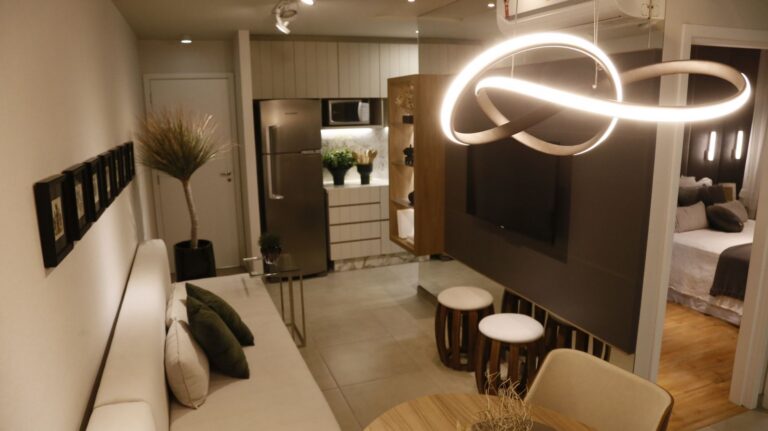
A studio needs soft division without construction. The tool for that is furniture with a finished back, not a bare one. My sofa sits with its back to the sleeping area, and because the back panel is upholstered instead of raw wood, it functions like a low wall. A bookshelf can do the same job if the back is closed rather than open, since an open-backed shelf lets the eye travel straight through and erases the separation you were trying to create.
This is the cheapest form of room division available. It costs nothing beyond the furniture you were going to buy anyway, and it does not require a landlord’s permission the way a curtain track or a built partition might.
One surface, several jobs
I own a console table that has been a desk, a bar during two parties, and a spot to fold laundry, sometimes all in the same week. It works because I chose a table with no drawers and a plain top, thirty inches deep, which is wide enough to hold a laptop and a plate at the same time without either falling off. A narrower table looks better in photos and works worse in practice.
The rule I use now: before buying a surface, list three different things it will need to hold in a normal week. If I can only think of one, I do not buy it, because a studio has no room for single-purpose furniture.
- A dining table that seats two should also survive as a desk during the day.
- An ottoman should open for storage, not just look upholstered.
- A bench at the foot of the bed should be sturdy enough to sit on while putting on shoes, not just decorative.
What I got rid of
I returned an armchair two weeks after buying it. It was comfortable and it looked right in the store, but in the apartment it did nothing the sofa could not already do, and it blocked the path from the kitchen to the closet. Losing forty dollars on the restocking fee taught me more about furnishing a studio than any article I had read before moving in.
If a piece of furniture only does one thing, ask what you are giving up in floor space to keep it there.
A studio rewards subtraction more than it rewards clever shopping. The apartment that finally felt calm to live in was not the one with the most thoughtfully chosen pieces. It was the one with the fewest pieces that could not double as something else.
Living with the compromise
Some things never resolve cleanly. My bed is visible from the kitchen no matter how I arrange the room, and I have made peace with that instead of pretending otherwise. A studio is not a design problem you solve once. It is a room you keep negotiating with as your stuff and your habits change. The furniture that worked for the first year of grad school did not work once I started cooking real meals and needed counter space more than I needed a reading chair. Expect to renegotiate the layout at least once a year, and do not treat the first arrangement as final just because it took a whole Saturday to move everything into place.