This article may contain affiliate links. If you buy through them, Decorating Our Space may earn a small commission at no extra cost to you. Learn more.
My childhood home had a fireplace in the living room, and every layout in that house started from the same question: what faces the mantel. I did not think about that habit again until I moved into an apartment with no fireplace, no built-in shelving, and no single wall that announced itself as the important one. I spent months sliding furniture around a room that had nothing to organize itself around.
Most rooms do not hand you a focal point
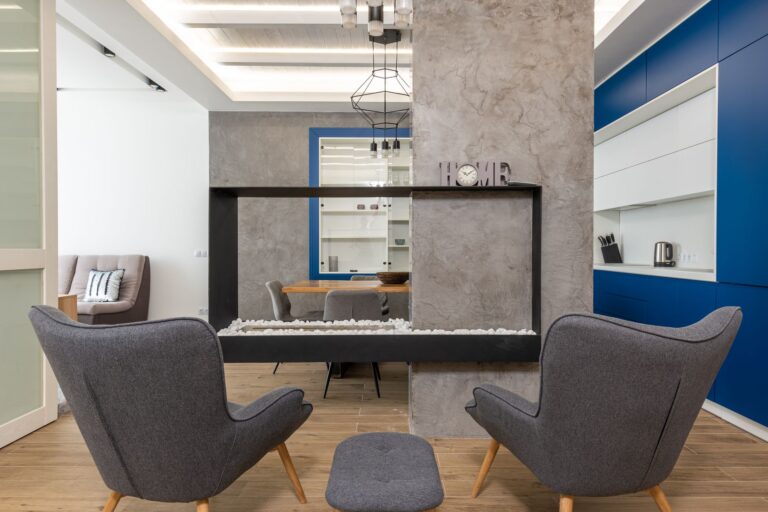
A fireplace, a large window with a real view, a wall of built-in shelving. These are the obvious anchors, and if a room has one, the layout mostly writes itself. Furniture faces it, and the arrangement feels settled almost by default. Most apartments and plenty of houses do not have any of that. What they have is a flat wall, a window facing a parking lot, and a doorway in an inconvenient spot.
If your room falls into that second group, the focal point is not missing. It just has not been assigned yet.
Pick the wall with the fewest interruptions
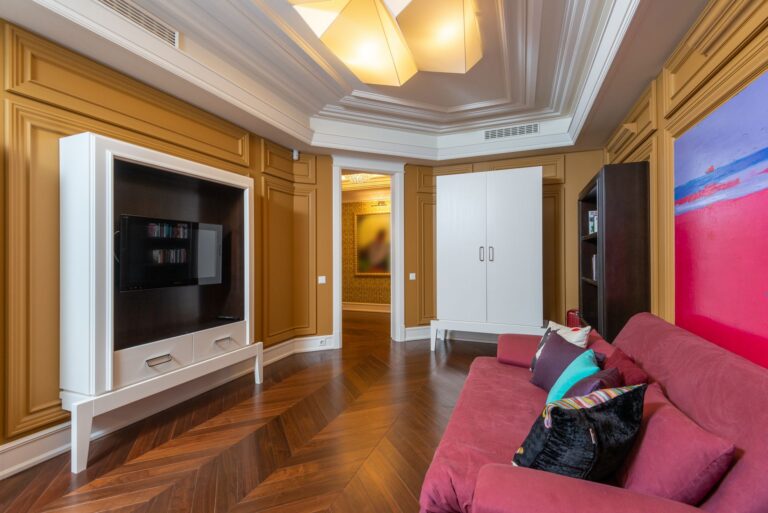
I looked for the one wall in my living room without a door, a heating vent, or a window breaking it up. It turned out to be the wall opposite my front entrance, which also happened to be the first thing visible when I walked in. I put my media console there, not because television is glamorous, but because that wall had the fewest obstacles and the best sightline from the doorway.
A wall does not need to be beautiful to become a focal point. It needs to be uninterrupted enough that furniture placed against it looks intentional rather than accidental.
Furniture can manufacture a focal point
Once I accepted that my room had no natural anchor, I stopped waiting for one and built it instead. A tall bookshelf, filled and arranged rather than half empty, became the visual weight the room needed on one side. Everything else, the couch, the chairs, the rug, got arranged in relation to that shelf and the console wall across from it.
A large piece of furniture, placed with intention on an otherwise blank wall, does the same job a fireplace does in a house that has one. It gives your eye somewhere to land first.
Secondary focal points matter more than people expect
Every room I have arranged well ends up with a second, smaller point of interest, something you notice after the main one. In my apartment that is a cluster of framed photographs on the wall behind my reading chair. It is not competing with the console wall. It rewards someone who sits down and actually looks around the room instead of just passing through it.
The first thing you see from the doorway is the real focal point, whether you planned it or not.
Stand in the entrance to the room and notice what your eyes land on first. If it is a stack of mail on a side table or the back of a couch, that is your actual focal point right now, by default, and it is probably not doing the room any favors. Redirecting that first sightline toward something you chose on purpose changes how the whole room reads, even if you move almost nothing else.
Orienting seating around a chosen point
Once I settled on the console wall as the primary focal point, I angled the couch to face it directly and let the two side chairs pick up a secondary angle toward the bookshelf. Nothing sits at a random angle anymore. Every seat in the room answers the question of what it is facing, and that alone made the layout feel finished in a way it never had before.
Windows are a focal point people underuse
My bedroom window does not have a dramatic view, just rooftops and a stretch of sky, but I still built the room around it instead of around the bed’s original position against an interior wall. Morning light became the thing the room was arranged for, and the chair I read in now sits at an angle to that window instead of facing a blank wall.
A focal point is a decision, not a discovery. My apartment did not come with one built in, and most rooms will not. Choosing a wall, a piece of furniture, or a window, and then arranging everything else to acknowledge it, did more for how the space felt than any single item I could have bought.
One focal point per room, not two competing ones
My first attempt at this went wrong because I tried to make both the console wall and the window into equally important anchors, angling half the furniture toward each. The room ended up feeling indecisive, like it could not settle on what it wanted attention to land on. I picked the console wall as the primary point and let the window become secondary, something the reading chair alone acknowledges, and the indecision disappeared.
Height helps a focal point read as intentional
A focal point that only exists at eye level or below can get lost in a room with any visual clutter. I raised the artwork above my console table higher than felt natural at first, closer to the top third of the wall, and it made the whole wall read as a single composition instead of a console with some things propped above it. Height draws the eye before anything else does, which is part of why a tall bookshelf works as an anchor even when it holds nothing dramatic.
Revisiting the focal point occasionally is worth doing. Mine shifted from the console wall toward the bookshelf about a year in, once I filled the shelves properly and they became the more interesting thing in the room. The furniture angles shifted with it, gradually, without a full overhaul.