This article may contain affiliate links. If you buy through them, Decorating Our Space may earn a small commission at no extra cost to you. Learn more.
Every curtain I hung in my twenties was mounted right at the edge of the window frame, because that seemed logical at the time. It made every window look smaller than it was and blocked light even when the curtains were fully open, since the fabric had nowhere to go but in front of the glass. Rod width is one of those measurements that feels like it should not matter much and then changes the entire window once you get it right.
The basic rule for width
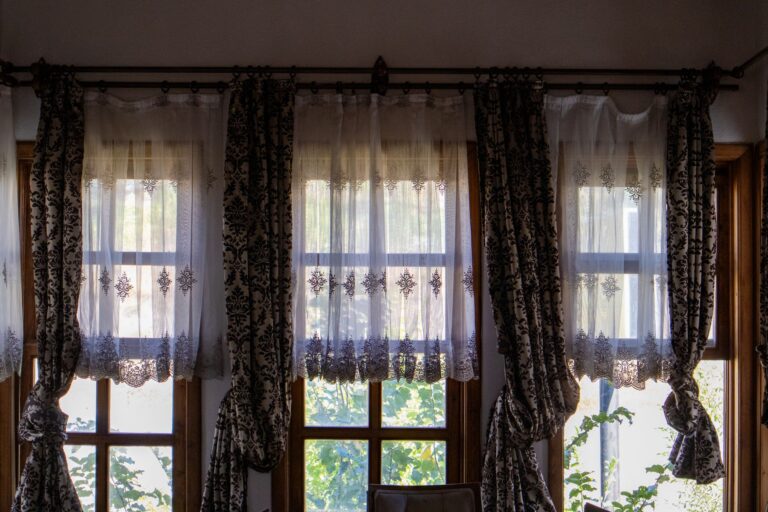
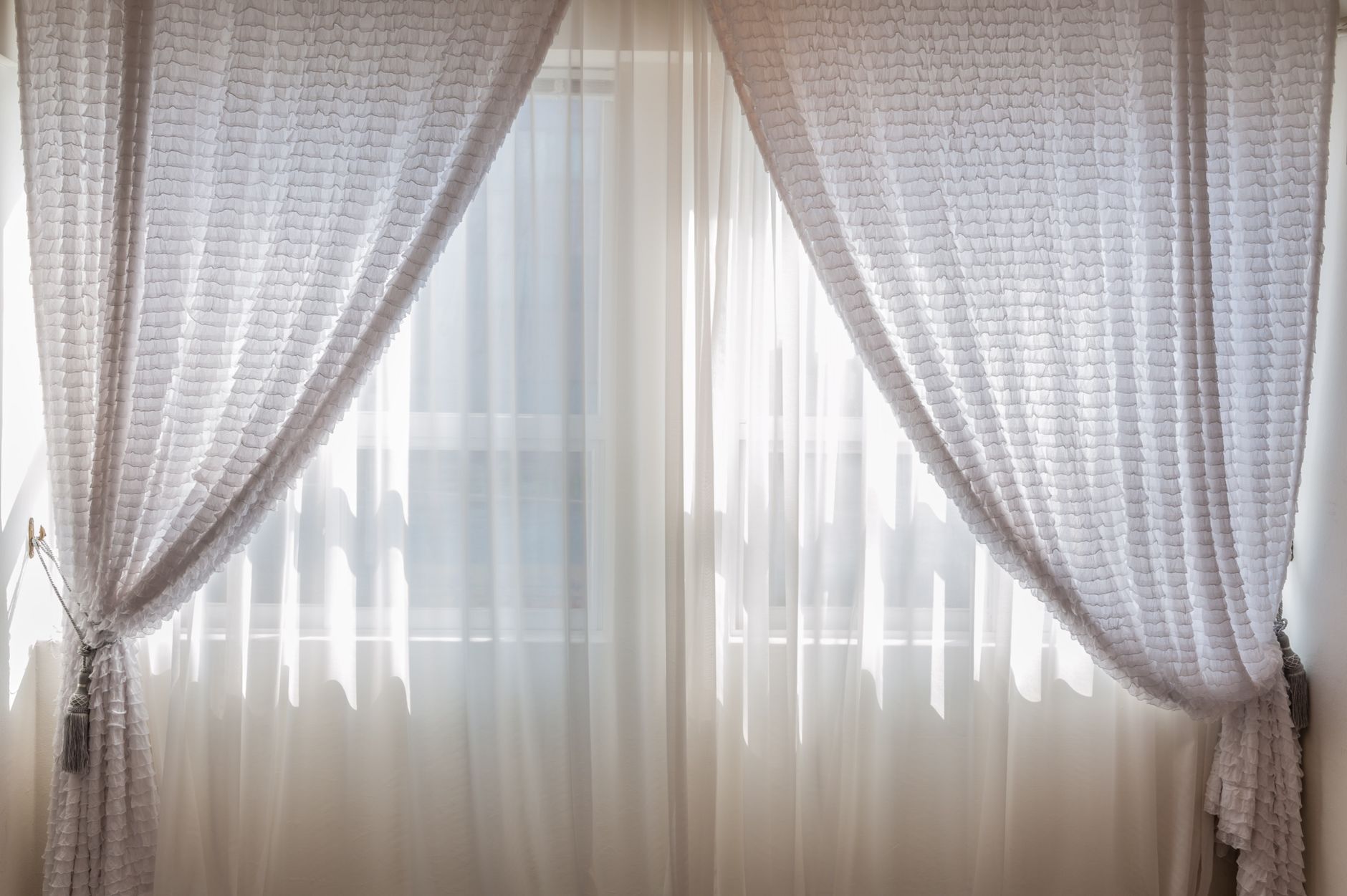
Extend the rod at least three to six inches beyond each side of the window frame, meaning six to twelve inches wider than the frame in total. In a room with more wall space on either side of the window, going wider still, eight to ten inches past each edge, lets the curtains stack almost entirely off the glass when open, which lets in the maximum amount of light and makes the window look larger than its actual dimensions.
This is different from the ceiling height rule, and the two work together rather than replacing each other. Height makes the window look taller. Width makes it look wider and lets more light through when the curtains are open. Do both and a modest window can read as a much larger one.
Why tight-mounted rods block light
When a rod stops right at the window frame, the curtain panels have nowhere to stack except directly in front of the glass, even fully open. This is the single biggest complaint I hear from people who say their curtains “make the room dark” even during the day with the curtains drawn open. The fabric itself is usually not the problem. The rod is too narrow to let the fabric clear the window.
I fixed this exact issue in a friend’s home office by swapping a rod that matched the window’s width for one twelve inches wider on each side. Nothing else changed, not the fabric, not the curtains themselves, and the room measurably brightened during the day just from the panels finally clearing the glass.
Fullness: the other half of the width question
Rod width tells you where the curtain hangs when open. Fullness tells you how much fabric is actually on the rod to begin with, and the two need to match or the curtains either look skimpy when closed or overcrowded when open. As a working ratio, the total fabric width of both panels combined should be roughly two to two and a half times the width of the rod itself for a gathered, full look when closed.
A rod that is forty-eight inches wide, for example, generally wants panels that together add up to somewhere between ninety-six and one hundred twenty inches of fabric before any pleating or gathering. Buying curtains sized only to match the rod width one to one is the most common reason curtains look thin and flat when drawn closed, since there is no extra fabric to create folds.
Narrow walls and other constraints
Not every window has six inches of clear wall space on each side. Windows close to a corner, next to a doorway, or boxed in by cabinetry sometimes only allow an inch or two of extension before running into an obstacle. In those cases, extend as far as the wall allows on the open side and accept a shorter extension on the constrained side, rather than keeping both sides artificially even. An asymmetric rod extension is far less noticeable than curtains that cannot stack clear of the glass.
For very tight spaces, a single curtain panel that stacks entirely to one side, rather than a symmetrical pair, sometimes solves the problem better than trying to force a traditional two-panel setup into a space that cannot support it.
Bay and corner windows need a different approach
For bay windows, width is measured along each individual pane rather than across the whole bay as one number, then the corner brackets are chosen to bridge the angles. Getting one pane’s width right does not guarantee the whole bay looks proportional, so I mock up the full run with painter’s tape before ordering any hardware, the same way I test rod height on a new installation.
A simple way to check your own windows
Measure the window frame width, decide how much wall space you have free on each side, then add that extension to both sides of the frame measurement to get your rod length. Multiply that rod length by two to two and a half to get your target total fabric width, then divide by two for a standard pair of panels. Round to the nearest available ready-made size, or go custom if your numbers fall in between.
A rod sized to the window looks correct at a glance and wrong in daily use. A rod sized to the wall lets the room breathe and the light in.
I now measure wall space before I measure the window itself, since the wall is usually the more generous number and the one people forget to check. Every room I have redone with this in mind has looked larger for it, without moving a single piece of furniture.