This article may contain affiliate links. If you buy through them, Decorating Our Space may earn a small commission at no extra cost to you. Learn more.
My sister visited two summers ago and asked why all my chairs faced the television. I did not have a good answer. Every seat in the room pointed at the same wall, so when she and I sat down to talk, we ended up twisted sideways, talking over the arms of two chairs that were never meant to face each other.
That visit is the reason I rearranged the whole room, and it taught me that a conversation area is not about buying new seating. It is about pointing the seating you already have at each other instead of at a wall.
Start with what people are actually doing
A living room usually serves two different activities: watching something, and talking to another person. Most layouts default to the first and forget the second entirely. If your seating only works when everyone stares in the same direction, you do not have a conversation area. You have a small theater.
I kept the television. I did not get rid of anything. I just stopped treating it as the only thing in the room worth facing.
Eight feet is the distance that matters
The rule I go by now is that no two seats meant for talking should be more than about eight feet apart, measured from the front edge of one seat to the front edge of the other. Beyond that distance, people raise their voices without noticing, and a room starts to feel like a waiting area instead of a place to sit together.
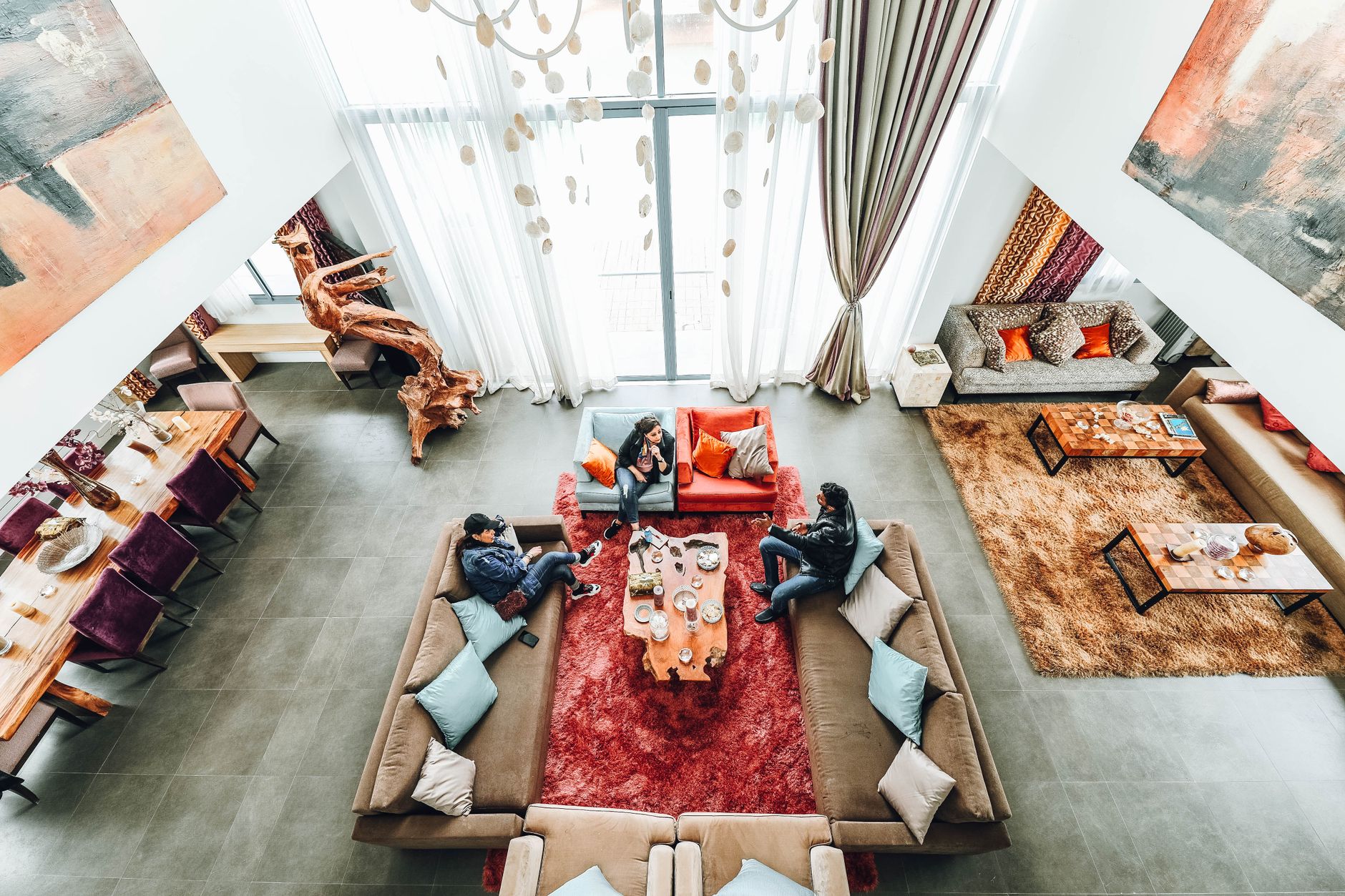
My two armchairs and the couch used to be spread across a room that was nearly sixteen feet wide, each piece hugging its own wall. I pulled the armchairs in by several feet, angled them toward the couch rather than square against the wall, and the same three pieces of furniture suddenly made a group instead of three separate islands.
Angle beats straight-on
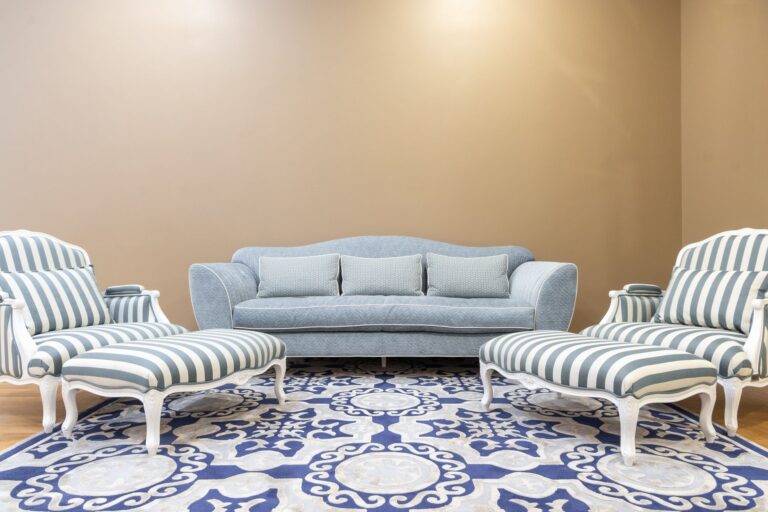
Two chairs facing each other head-on can feel confrontational, almost like an interview. A slight angle, somewhere between forty five and ninety degrees relative to the sofa, reads as more relaxed and gives people somewhere to look besides directly at the other person’s face. I set my chairs at an angle to the couch rather than parallel to it, and the room stopped feeling like a formal sitting area.
Every seat needs a surface within reach
A conversation area breaks down fast if someone is holding a mug with nowhere to put it down. I try to make sure every seat has a table, shelf, or the coffee table itself within arm’s reach, without anyone leaning or standing up. My reading chair sits closest to a small side table I already owned and had been using in the bedroom. Moving it fifteen feet solved a problem I had been living with for a year.
A rug does more to define a conversation area than any single piece of furniture.
Once the seating faced inward, the group still looked scattered until I put a rug underneath it. All the front legs of the couch and both chairs now sit on the same rug, which visually ties the group together and marks the boundary of the space even in a room that is otherwise open on two sides.
Working around a room that is too narrow
Not every room has the width for chairs to face a couch across an open gap. In a narrower space, I have had better luck placing two chairs perpendicular to the couch instead, forming an L rather than a U. It uses less floor width, keeps the eight foot rule intact, and still lets three or four people talk without turning their whole bodies.
What to leave out
Resist adding a piece just to fill a gap in the circle. An extra ottoman or accent chair dragged in from another room can wreck the proportions of a conversation area that was working fine with three pieces. I tried adding a fourth seat once, borrowed from the dining set, and it crowded the middle of the room enough that nobody used it. It went back to the dining table within a week.
The furniture in my living room now is exactly what I owned before my sister’s visit. Nothing was replaced. I just turned the pieces toward each other, measured the distance between them, and put a rug under the whole arrangement. The room does two jobs now instead of one.
Test it with an actual conversation
The best way I have found to check a conversation area is to sit in it with another person and try to talk for ten minutes without adjusting anything. My father visited a few months after the rearrangement, and we sat in the two main seats through an entire cup of coffee without either of us shifting position, leaning forward to hear, or twisting to make eye contact. That single, unremarkable visit told me more about whether the layout worked than any amount of staring at it alone ever could.
Uneven seat heights change the feel more than distance does
My armchairs sit slightly lower than my couch cushions, and for a while that mismatch made conversations feel oddly hierarchical, like the couch was the head of the table. I did not replace either piece. I added a firmer cushion to each armchair, just enough to bring the seat heights within an inch or two of each other, and the whole grouping suddenly felt like equals talking rather than one seat looking up at another.
A conversation area is never really finished after one rearrangement. Mine still gets nudged a few inches every season, usually after I notice someone leaning too far to hear or reaching too far to set down a cup. Small adjustments, not full overhauls, are what keep it working.