This article may contain affiliate links. If you buy through them, Decorating Our Space may earn a small commission at no extra cost to you. Learn more.
I painted a small powder room a deep charcoal after years of being told dark colors shrink small spaces, and it became one of my favorite rooms in the house. That advice isn’t wrong exactly. It’s incomplete, and treating it as an absolute rule caused me to avoid dark paint in small rooms for longer than I should have.
What dark paint actually does
A dark color absorbs more light than it reflects, which does make the boundaries of a room less visible than a pale color would. In a room with poor lighting and small or no windows, that can genuinely make the space feel more closed in, since there’s less light bouncing around to define where the walls end. This is the part of the advice that holds up.
What the advice leaves out is that a small room with dark walls and good lighting, or with light pouring in from a window, doesn’t shrink the same way. Instead, the walls seem to recede, since there’s nothing catching the eye at the boundary the way a stark pale wall does under bright light. My powder room has one small window and a single overhead fixture, and the charcoal makes it feel enclosed in a way I chose on purpose, not a way that feels cramped.
Where dark tends to work in a small room
- Powder rooms and small bathrooms, spaces you pass through rather than spend long stretches in.
- A small room with at least one good light source, whether that’s a window or layered artificial lighting.
- A room where you want a sense of enclosure on purpose, like a den or a reading nook.
Where it tends to fight the room
A small room with a single dim overhead bulb and no natural light is the hardest case for dark paint. Without enough light to bounce off the walls, the room can genuinely start to feel like a box rather than a cozy space. I tried a deep green in a windowless laundry closet years ago and gave up on it within a week, repainting it a pale gray instead. The green wasn’t a bad color. It just had no light to work with, and the room felt smaller, not richer.
Dark paint needs light to bounce off of. Take the light away and it just looks dark, not intentional.
The ceiling decision matters as much as the wall color
Painting the ceiling the same dark color as the walls in a small room tends to wrap the whole space together, removing the visual break where wall meets ceiling. Some small rooms benefit from that, feeling cocooned rather than cramped. Others feel lower and heavier once the ceiling disappears into the wall color. I’ve done both, and the difference usually comes down to ceiling height. A small room with a taller ceiling can handle a dark ceiling well. A small room with a standard eight-foot ceiling often feels more comfortable with a lighter ceiling left in place, even if the walls go dark.
Trim can lighten the effect without changing the wall color
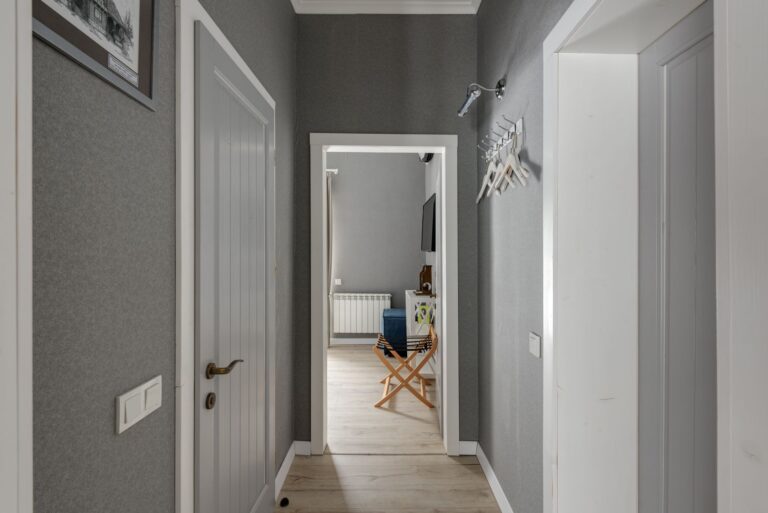
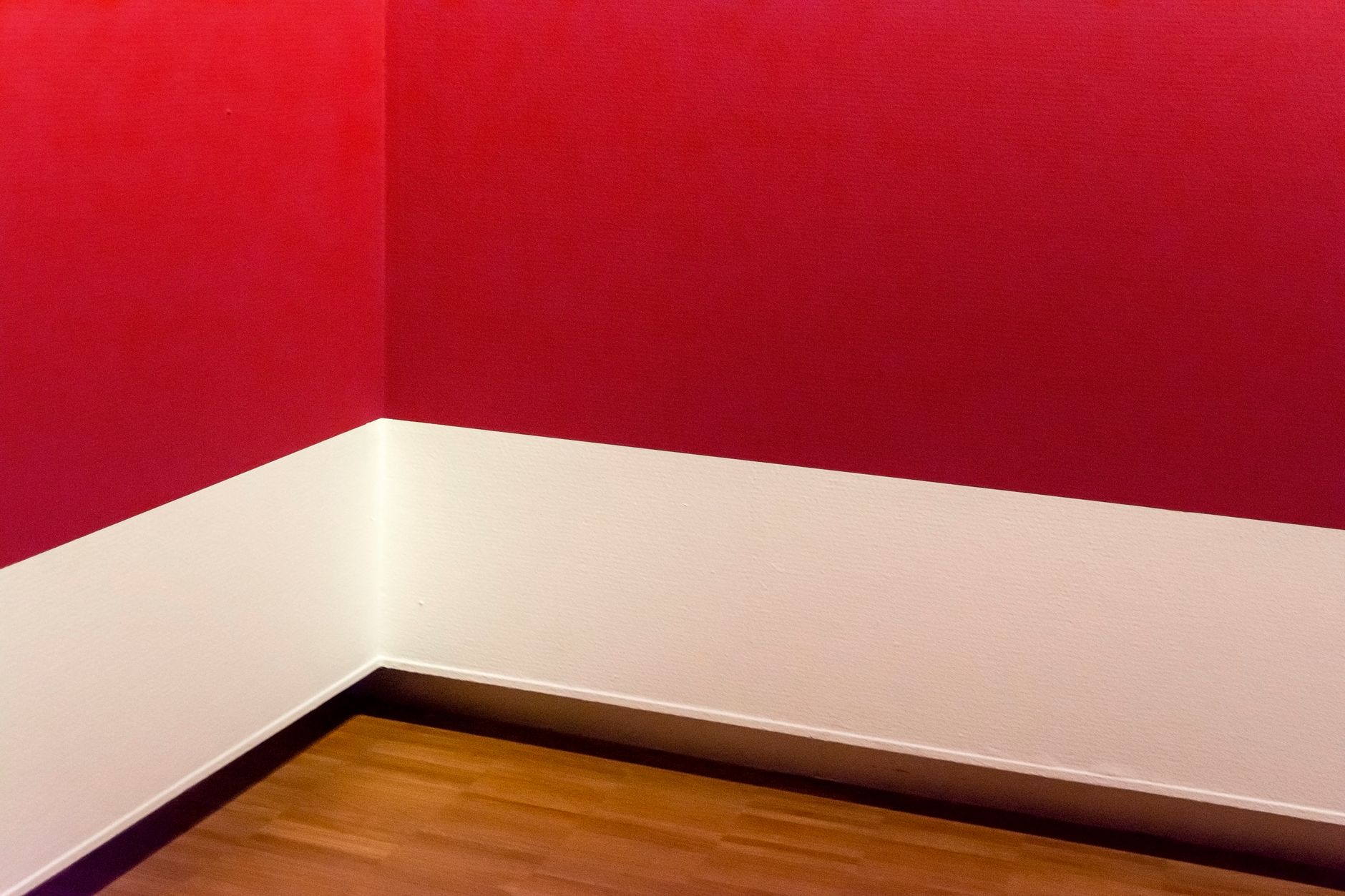
Keeping the trim a pale color against dark walls gives the eye a clear edge to follow, which can keep a dark small room from feeling shapeless. I did this in the powder room, keeping the existing white trim rather than painting it to match the charcoal, and the contrast keeps the room feeling defined rather than swallowed.
Dark does not have to mean black
When people say dark paint, I think most picture something close to black, and that’s rarely what actually works well in a small room. A deep navy, a bottle green, or a charcoal with a hint of brown reads as dark without going flat and lifeless the way true black often does on a wall. These colors still have an undertone doing work underneath the depth, and that undertone is what keeps a dark wall from feeling like a hole in the room instead of a surface with some warmth or coolness to it. My powder room charcoal has a faint brown undertone rather than a blue one, which is part of why it reads as rich rather than cold, even with only one small window feeding it light.
Test it the same way you’d test any other color
The testing process for a dark color doesn’t change just because the room is small. I still use a large sample board, still check it at different times of day, and still look at it under the room’s actual lighting rather than a bright showroom bulb. If anything, testing matters more with dark colors in small rooms, since the outcome depends heavily on how much light is actually available, and that’s something a small paint chip can’t show you at all.
Small rooms and dark paint aren’t natural enemies. They’re a combination that depends on light more than any other pairing I’ve worked with, which is exactly why blanket advice about it tends to be more misleading than helpful.