This article may contain affiliate links. If you buy through them, Decorating Our Space may earn a small commission at no extra cost to you. Learn more.
My living room has one wall that is almost entirely windows and one wall that is almost entirely blank, nearly nine feet across with nothing but a light switch interrupting it. For two years I filled it with a rotating cast of small frames, four here, six there, and it never settled. Then I bought one large piece, about 40 by 60 inches, and the wall finally stopped feeling unfinished.
That experience taught me the decision between one large piece and several small ones is not really about the square footage of the wall. It is about what the room needs visually and how much time you want to spend maintaining an arrangement.
What a single large piece does
One large piece acts like a piece of furniture. It anchors the wall the way a sofa anchors a floor plan, and it gives your eye one clear place to land. This matters most in rooms that already have a lot of visual activity, patterned rugs, bold cabinetry, several textures of wood. Adding a cluster of smaller frames on top of that can make the room feel cluttered even if each individual piece is calm.
A single piece is also lower maintenance. There is no spacing to obsess over, no risk of one frame going crooked and throwing off the whole composition, and no need to rehang everything when you want to change one element. If I want to swap the mood of that nine foot wall now, I swap one piece instead of six.
What a grouped arrangement does
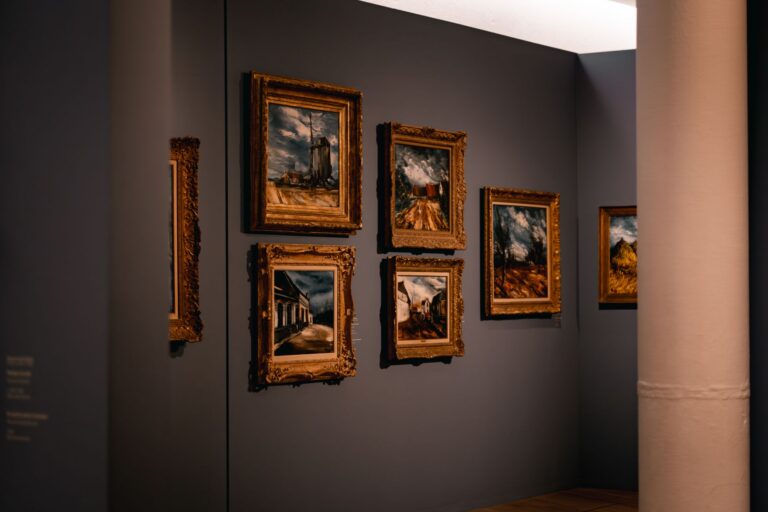
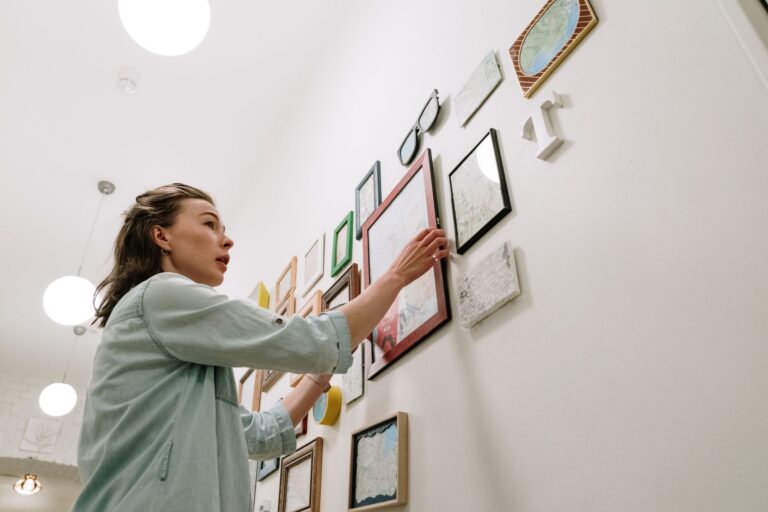
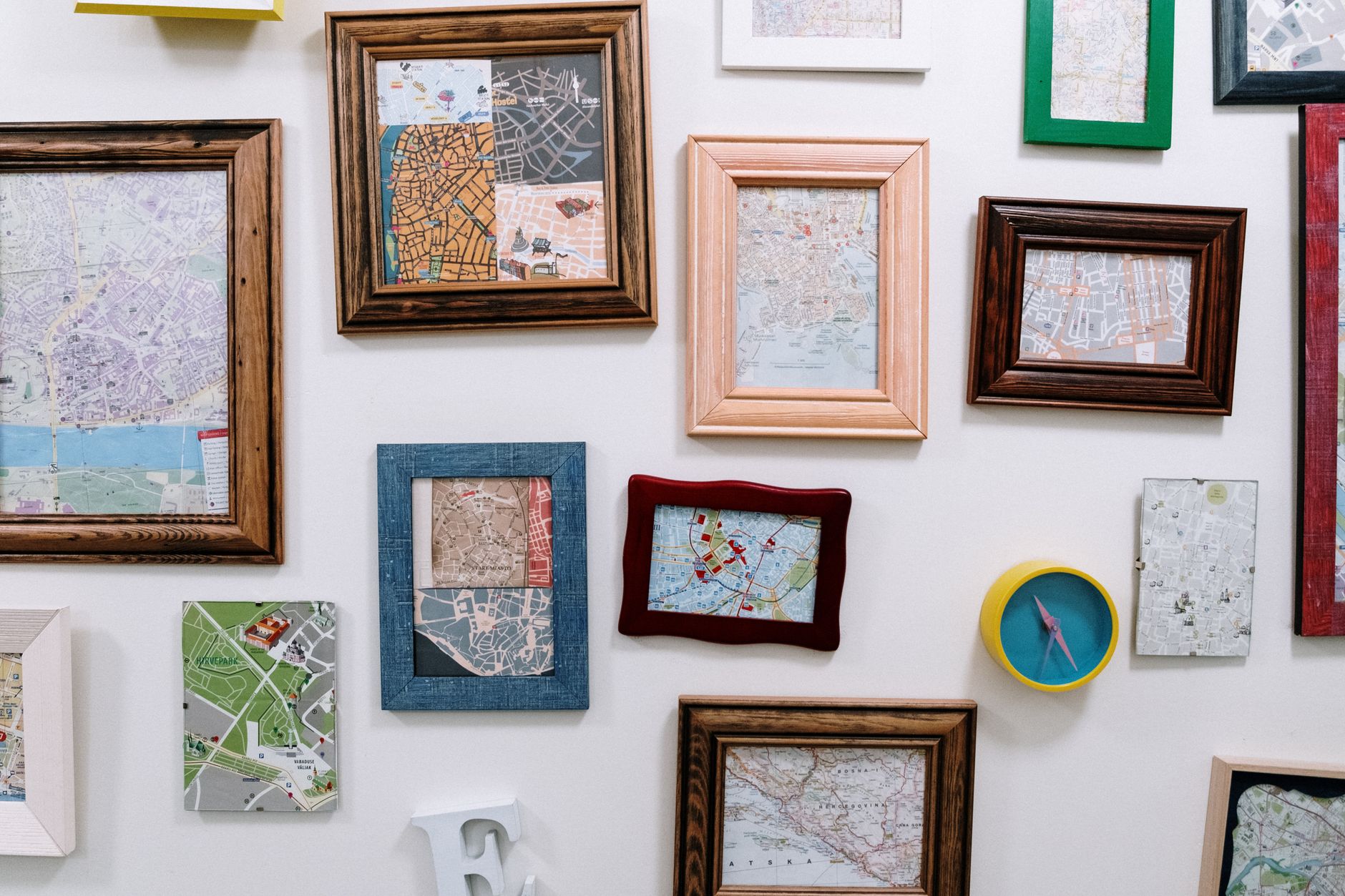
Several smaller pieces let you tell a story rather than make one statement. A cluster over my desk mixes a botanical print, a small map, and a postcard from a market in Jaipur that I never got framed properly until last year. Individually none of them would hold that wall on their own, but together they build a texture that a single large print could not.
Groupings also work better on narrow or oddly shaped walls, hallway walls, or walls broken up by doorways and light switches, where a single large piece would not physically fit or would look stranded next to an outlet.
Questions that actually decide it
- Does the room already have a lot of pattern and texture, or is it fairly quiet? Busy rooms usually want one calm anchor, not more visual noise.
- Do you have pieces that relate to each other in color or subject, or are they unrelated one off finds? Related pieces group well. Unrelated pieces often look better given their own space.
- How much wall is truly open and unbroken? A grouping needs at least as much continuous space as a single piece would, since a scattered cluster with switches and vents cutting through it looks accidental rather than composed.
- How often do you want to change things? Single pieces are simpler to swap. Groupings reward patience and get better as you add to them slowly.
Sizing a single piece correctly
A common mistake is choosing a large piece that is still too small for the wall. As a rough guide, art over a sofa or console should span 60 to 75 percent of the furniture’s width. Art on an open wall with no furniture reference should fill somewhere between half and two thirds of the wall’s width, not a narrow strip in the middle of a wide expanse.
Sizing a grouping correctly
For a cluster, the opposite math applies at first glance but the goal is the same, treating the whole group as one large shape. Lay every piece on the floor, arrange them until the overall footprint pleases you, then measure that footprint as if it were a single frame and apply the same 60 to 75 percent guideline relative to the furniture below it.
A grouping that reads as scattered individual frames has not yet found its shape. A grouping that reads as one block has.
I still think the nine foot wall could have worked either way, honestly. What tipped it toward one large piece was maintenance more than aesthetics. I move frequently enough between apartments that hanging one piece twice sounded better than hanging six pieces twice. That is a legitimate reason to choose one direction over the other, even if it never shows up in a design magazine.
Mixing the two approaches
Some walls do not need to choose one direction at all. A single large piece flanked by two small pieces, one on each side at a slightly lower height, can give you the anchor of a statement piece and the texture of a grouping in the same footprint. I used this on a narrow wall behind my dining table, a medium print in the center with two small botanical sketches at hip height on either side, and it reads as one composed idea rather than a compromise.
The key to mixing scales successfully is keeping a clear size hierarchy. One piece should be obviously the largest, and everything else should support it rather than compete with it. Three medium sized pieces of roughly equal size next to one large piece tends to fight for attention instead of settling into a hierarchy.