This article may contain affiliate links. If you buy through them, Decorating Our Space may earn a small commission at no extra cost to you. Learn more.
I lived in four different rentals over six years before buying anywhere, and every lease had the same clause about restoring walls to their original condition. I still managed to hang art in every single one of those apartments, and I got my full deposit back every time, because I learned which no drill method actually suits which kind of piece instead of relying on one solution for everything.
Adhesive strips work, within limits
Adhesive hanging strips, the kind that come in a range of size and weight ratings, hold surprisingly well for lightweight frames, generally up to about 15 to 20 pounds when you use the correct number of strips for the piece’s weight and size. The failure point is almost always application, not the product itself. The wall surface has to be clean and dry, free of dust or texture that keeps the adhesive from making full contact, and the strips need real pressure held for the full time listed in the instructions, usually 30 seconds per strip, not a quick press.
Temperature matters more than people expect. Strips applied in a cold room or on a wall that gets direct afternoon sun can soften and slip over time. I lost one small framed print this way in an apartment with a west facing wall that got uncomfortably warm every afternoon, and after that I stopped using adhesive strips on any wall that gets strong direct sun.
Command style hooks for anything with a frame
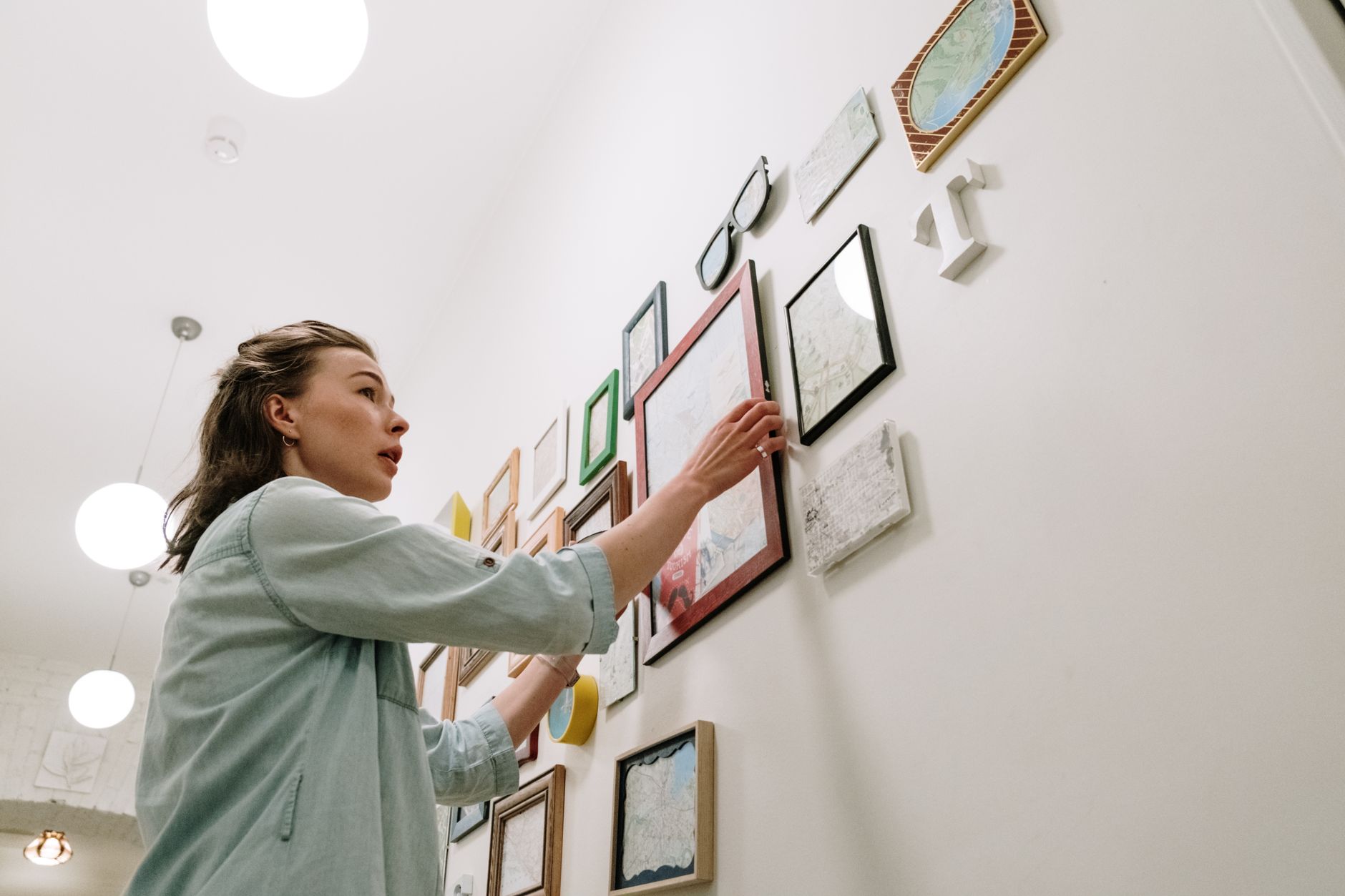
The hook version of the same adhesive technology works for framed pieces with a wire or a sawtooth hanger, and it removes cleanly with the pull tab method, stretching the strip downward rather than pulling it straight off the wall. I keep a small stock of different sizes on hand because using an undersized hook rated below the frame’s actual weight is the most common reason these fail.
Leaning instead of hanging
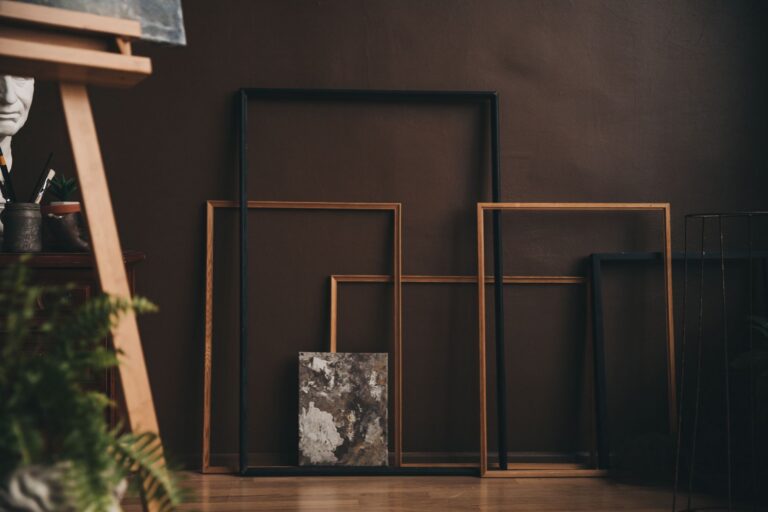
A large piece leaned against the wall on the floor, or on a shelf or a ledge, avoids the wall entirely. A picture ledge, a narrow shelf mounted with just two or three screws into studs, or with heavy duty anchors if studs are not available, lets you lean and layer multiple pieces without a hole for each one. This is the method I have relied on most across every rental, since one ledge with three or four screw holes replaces what would otherwise be individual holes for six or seven frames.
- Overlap pieces slightly for a curated, collected look rather than lining them up edge to edge.
- Anchor the front edge of leaned pieces with a small dab of museum putty at the base to prevent sliding if the ledge is bumped.
- Keep the heaviest pieces at the back of the layered arrangement, both for visual balance and so lighter pieces do not get crushed.
Tension rods and curtain hardware for textiles
For fabric pieces, tapestries, or woven wall hangings, a tension rod fitted between two walls or inside a doorway alcove holds the piece without any hardware in the wall itself. This works especially well in a narrow hallway or alcove where the rod has two solid surfaces to press against.
Picture rail systems
Some older buildings still have a picture rail molding near the ceiling, original to the building rather than something you install. If your rental has one, a rail hook and cord system lets you hang real weight, including framed art and mirrors, entirely from the rail with zero wall damage. It is worth checking for this molding specifically, since it is easy to mistake for ordinary trim and never think to use it.
The goal in a rental is not to avoid every hole. It is to avoid the wrong holes, the ones that cost you the deposit.
What actually protects a deposit
Most leases allow small nail holes from standard picture hooks, the kind that leave a hole smaller than a pushpin, and the real risk is usually larger anchors, adhesive residue left behind from a rushed removal, or paint pulled off with a strip that was applied to freshly painted walls before the paint had fully cured. Waiting a full month after any repaint before applying adhesive products has saved more than one wall for me, since freshly cured paint releases far more easily than paint still off gassing underneath.
Washi tape and lightweight paper art
For unframed prints, postcards, or paper art under a few ounces, washi tape rolled into a small loop on the back, or a few small pieces along the top edge, holds fine without any risk to paint. It will not support anything with real weight or a rigid frame, but for a rotating collection of postcards or small prints above a desk, it lets you change the arrangement often without accumulating adhesive residue or holes of any kind.
Furniture as a display surface
A tall dresser, a bookshelf, or the top of a piano gives you a place to lean and layer art with zero wall involvement at all. This is the simplest no drill method there is, and it doubles as a way to rotate pieces seasonally without redoing any hanging setup, since moving a leaned piece takes seconds compared to any wall mounted method.